
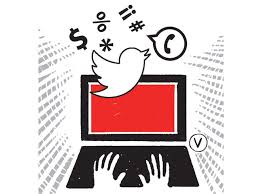
NOTE: This article is written to get a public opinion over the issue that whether social media content should be regulated or not. Hence, do share your views by commenting on the post.
The last decade has seen a widespread use of the social media due to affordable smartphones, affordable data plans and increased broadband penetration and the expansion of internet use. Social Media is a form of an electronic communication used by people for social networking by creating online communities to express their ideas, personal message and other content. Social media platforms are designed to enable users to share any content with other users or to make such content available to the public (social network). However, there is no regulation on the content that is being posted on the social media and this, in the recent times, has caused a lot of communal unrest and questioned the unity and integrity of the country. People in order to exercise their fundamental right of expression under the constitution, often forget their duties and responsibilities as a responsible citizen of this country. And the government should be worried about “inconceivable disruption to the democratic polity” from unfettered social media content.
1. INTRODUCTION
Various social media platforms have become a topic of discussion quite recently due to the flow of content over these platforms which induce and emasculate the minds of citizens. Certain content that is allowed to be posted vide these platforms are quite conjectural in nature due to broadcasting of posts that stimulates misinformation, hate speeches, defamatory content, threats to public order and anti-national activities.
Lack of regulation on the flow of content on the social media platforms, have attracted violence amongst the people which have caused communal unrest and have questioned the unity of the nation. Social media platforms often offer violent actors the opportunity to publicize their acts. For instance, in India, mob lynching and other types of communal violence have originated with the rumors on the WhatsApp groups and other social media platforms. Social scientists and others have also observed that social media posts, and other online speech, can inspire acts of violence.
2. NEED TO REGULATE SOCIAL MEDIA CONTENT
It is important to note that social media platforms do not create their own content but it is only a platform wherein users produce the content and post on these social media platforms. This being the scenario, many social media platforms contend that they are not responsible for what users produce and are thus exempt from the libel, defamation, and other laws and regulations that govern traditional media like newspapers and television. In other words, they are platforms for free speech and assume no responsibility for what their users communicate. While conversing about free speech,the fundamental right to freedom of speech and expression guaranteed under Article 19 (1) (a)[1] of the India Constitution is regarded as the first condition of liberty. It enjoys important position in the hierarchy of liberty.As such, this right is so fundamental that it cannot be taken away or abridged under any circumstances. However, under our constitution no fundamental right is absolute and reasonable restrictions, as mentioned in Clause (2), of Article 19[2] can always be put on the exercise of those fundamental rights.
It is true, that the modes/ways/manner, in which many of the social media platforms are used in the recent times, could not have been anticipated before. For instance, Facebook was created to help connect with people. But quite recently, it was in a limelight during the U.S Presidential Election. It is a wise saying in the media world: “If it bleeds, it leads”.
3. SOCIAL MEDIA REGULATION: PRESENT SCENARIO
Till date, we do not have any law in force which would regulate the social media content. Thus, people have been posting content which is not only inflammatory but also has the tendency to incite violence amongst the citizens.
Quite recently, the Bombay High Court has ordered the State authorities to immediately block a video uploaded online by one, “AIMIM-Abu Faizal”, complained to have contained provocative content that would create hatred between the Hindu and Muslim communities.[3]
Moreover, the Mumbai Police reissued a prohibitory order under section 144 of CrPC against dissemination of malicious, derogatory or incorrect information through social media platforms like, WhatApp, Twitter, Facebook, TikTok, Instagram, in order to protect people from fake news or incorrect information about COVID-19.[4]
India has seen multiple violent incidents triggered through online posts. Such as in 2012, during what became known as the “Northeastern exodus,” thousands of people hailing from northeastern India boarded trains from Bangalore in southern India to Guwahati, following posts suggesting violent attacks on northeastern migrants. Then in 2013, the Muzzaffarnagar riots in the northern state of Uttar Pradesh, which left over 60 dead and thousands displaced, were triggered by a fake video circulating on social media, which was rumored to depict a Muslim mob brutally murdering a Hindu youth.
In 2017, India also saw a wave of mob attacks and lynching of innocent people spurred by online accusations of child abductions. At that time, people deemed to be “outsiders” were targeted by large mobs accusing them of kidnapping children, after warnings circulated on WhatsApp.[5]
It is true that technology offers new fast-paths wherein rumors can travel. It lends new meaning to the old phrase ‘A lie can travel halfway around the world, while the truth is putting its shoes on,'” said Chinmayi Arun, the founder of the Center for Communication Governance at Delhi’s National Law University.
4. CONCLUSION
Hence, with proliferating cases of improper use of social media; there is a sheer need to regulate such content over various social media platform. It is remarkable to mention that the government should be worried about “inconceivable disruption to the democratic polity” from unfettered social media content. However, when there is no regulation on the content that is being posted on the social media and this, in the recent times, has caused a lot of communal unrest and questioned the unity and integrity of the country. Thus, there is an utter need to regulate the flow of hate-mongering content over various social media platforms.
[1]INDIA CONST. art.19, cl. 1. sub cl. a
[2]INDIA CONST. art.19, cl. 2.
[3] Imran Khan son of Moin Khan v. State of Maharashtra &Ors. CRIMINAL WRIT PETITION NO.ASDB-LD-VC-7/20
[4]CP/XI(6)/144/ (Prohibitory Order)/2020, www.LIVELAW.IN
[5] WhatsApp in India: Scourge of violence-inciting fake news tough to tackle, Available at: https://www.dw.com/en/whatsapp-in-india-scourge-of-violence-inciting-fake-news-tough-to-tackle/a-52709823
BY: HITESH VACHHANI [FOUNDER MEMBER, JURISTIC LEGAL] AND JASMEE SANGHANI
DECLARATION
This is an original work of the Author(s) and is result of author(s) own intellectual efforts and is only for academic purpose. The matter embodied has been properly referenced and acknowledged to avoid any kind of copyright issues.
 JURISTIC LEGAL