
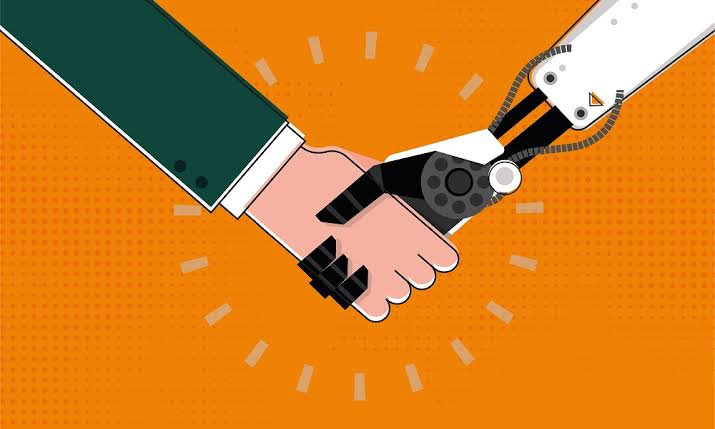

Artificial Intelligence has touched many areas of the legal field. Many people in the legal fraternity believe that the impact of artificial intelligence is limited. But unsurprisingly, there is already the use of AI in the legal field. For instance, filing of e-documents, analyzing the written submissions, analyzing the legal contracts, the use of much legal software such as AIR, Manupatra, SCC, etc., is nothing but the intrusion of AI in the various areas of law.
Traditionally, the lawyers had to go through various commentaries to find the relevant case laws. The introduction of AI has made it a very easy task for the lawyers and the judges to find the relevant case laws, analyze them, and use them for citing in the court of law. It is very efficient and less time-consuming.
The use of AI in the decision-making process is still a dream to be achieved. The use of ‘robot-adjudicators’ for an effective and unbiased decision-making process is something that many may not agree with. It is because the decision-making process requires an application of a judicial mind and procedural fairness. The role of the judges and the judicial institution is to render justice. A justice that is fair and quick.
Today, the judiciary is perceived to be a place where justice is done but is a very slow process. The question here is that what can be done so that the slowness is reversed i.e., the judicial process is quick, while still preserving the fairness? There arises a need, especially in cases of family disputes, arbitration matters, and other petty cases, to use AI as a mode to help the parties to anticipate the possible outcome of their case if not the entire decision-making.
The law indeed requires expert knowledge. And thus, a machine may not apply the required expertise. But what can be done is that the required expert knowledge can be acquired from the various legal experts and encoded in the form of the rules. And that rules would be applied when the factual information is provided to the system/ obtained by the system from the parties. Thus, an expert system or a rules-based AI can help minimize the burden of the judiciary, help the parties to anticipate the outcome and the cost of the matter.
For instance, the Arbitration process is deemed to be a process with minimal interference by the judiciary. But, the interference of the judiciary begins at the time of appointment of the arbitrator, challenges to the appointment of the arbitrator, interference in section 9, and section 34 stage of the arbitration.
Therefore, AI can be used at the initial stages to appoint the arbitrators, for filing of the written submissions, replies by the parties, determination of the claim, and help the parties to anticipate the outcome of the matter. However, the award can be passed based on the information and the data collected using AI and can also be challenged in the court of law. But initially, it would save a lot of judicial time. It is because the application for appointment of the arbitrators remains dormant for years, and thus, a lot of precious time is wasted especially when time is the essence or in patent infringement suits where the same is granted only for a limited period. This increases the cost that is borne by the parties. However, the use of the AI would cost-effective, less time consuming, and would reduce the additional burden put upon the judiciary.
 JURISTIC LEGAL
Above content is true and acceptable artificial intelligence has both negative and positive perspective though last para tell alot of it.
LikeLike
Today, the amount of data that is generated, by both humans and machines, far outpaces humans’ ability to absorb, interpret, and make complex decisions based on that data. Artificial intelligence forms the basis for all computer learning and is the future of all complex decision making. THE USE OF ARTIFICIAL INTELLIGENCE IN ALTERNATIVE DISPUTE RESOLUTION MECHANISM is very helpful read for me. Further, wish to read more to this. Thank You.
LikeLike
Today, the AI is playing a major role in the legal field. Moreover, a robot adjudicator would help in an effective and fair decision making process.
LikeLiked by 1 person